
Back to safety
Find more steadiness in moments of stress and overwhelm
Back to Safety helps you identify what you need in the moment. Choose from a growing library of exercises, ranging from a few minutes to more in-depth guided sessions. Track how each exercise affects you and learn to recognize what works best for you.
Practice, understand, and discover what works for you.
Download on the App Store
8 free exercises · no account required · no tracking
For iPhone and iPad · Available in English and Dutch

What do you need right now?
Sometimes there is high tension or restlessness. Other times you might feel tired, flat, or disconnected. And sometimes you mainly notice that your mind just keeps racing.
Back to Safety helps you not only find an exercise in these moments, but also better understand what is happening and discover what works for you.
From breathing and grounding to self-compassion, bilateral stimulation, and targeted exercises for panic or overwhelm.
More than just a collection of exercises
Back to Safety combines practice, understanding, and tracking your own experiences.
01
Practice
Choose what suits you in the moment. Some exercises take just a few minutes, while others offer more time to slow down, notice what you feel, or reflect step by step.
02
Understanding
Learn how specific exercises can help and what current research shows. The Insights section explains stress, autonomic regulation, sleep, and the window of tolerance.
03
Discover
Rate how you feel before and after each exercise. View your sessions and trends to see which exercises and times make a difference for you over time.
See how an exercise affects you
Before and after an exercise, you will note how you feel. The affect grid shows not only whether you feel better or worse, but also if your activation level changes.
The goal is not to achieve a perfect score. It is about learning to better recognize your own responses.

Before and after an exercise
Not what works on average. What works for you.
Exercises
A growing library for different moments

Exercises for different times
For tension and restlessness
Different moments call for different approaches. That is why Back to Safety offers a variety of exercises in various lengths.
For tension and unease · For panic and overwhelm · For moments of feeling shut down · For stillness, focus, and self-compassion
Sometimes you only have two minutes in the middle of a busy day. Other times, you may want to take more time for a longer guided exercise. Back to Safety grows with you. New exercises and content will be added in future updates.
See what you discover along the way
Back to Safety tracks your exercises, practice time, and mood data. This lets you review your progress over time and identify your own patterns.


Space for your experiences
The journal allows you to keep track of exercises, moods, and your own notes in one place. Premium gives you access to the complete journal and your personal overview.
Recognize your own stress patterns
A short quiz can help you identify your primary stress response pattern. The result is not a diagnosis. It is simply a tool to help you recognize your own reactions and find exercises that may support you.


INSIGHTS
More than exercises. Understand why they may help.
What happens when you are under tension for an extended period? Why can brief moments of rest make a difference? What is the window of tolerance? And what role do breathing, sleep, bodily signals, and self-compassion play?
In Insights, you'll find in-depth articles that help you better understand stress, autonomic regulation, and your own responses.
An overloaded nervous system
Window of Tolerance
Micro-moments of safety
Breathing and autonomic regulation
Shame and self-compassion
Dissociation and grounding
Sleep and recovery
BACKGROUND
Understand why it may help
Each exercise includes instructions, its potential benefits, and the supporting scientific research. This applies to all exercises, including the eight available for free.
The exercises in Back to Safety have been selected and developed based on relevant scientific insights and active principles from research into breathing, attention, stress regulation, self-compassion, and psychotherapy.
While not every individual exercise has been directly studied as a standalone intervention, I distinguish between what is known from research, what is plausible based on that research, and what has not yet been directly tested.
Back to Safety is not a treatment and does not replace professional care when needed.
Your data remains yours
You do not need an account to use Back to Safety. The data you enter in the app remains stored locally on your device. There is no tracking, and your personal data is not saved on any server.
No account
No tracking
Locally on your device
Start for free. Continue when you want more.
With eight free exercises, you can explore Back to Safety at your own pace. These free sessions also explain the purpose behind each exercise and the supporting research.
If you want more options, in-depth exercises, full access to Deep Dives, and greater insight into your patterns, you can upgrade to Premium.
FREE
Free
A meaningful way to get started with Back to Safety.
8 exercises, including the physiological sigh, box breathing, 5-4-3-2-1 grounding, and safe place
An explanation of the science behind each exercise and why it may help
2 guided audio exercises
Visual pacer for breathing exercises
Pre- and post-exercise check-in
Mood tracking diary with a limited number of sessions
Ambient ocean sound
Nervous system profile quiz with recommendations
No account required
No tracking
PREMIUM · EXPANDING LIBRARY
Premium
More choice, more depth, and more insight into what works for you.
€8.99 per month
or
€59.99 per year
Full access to the growing library of over 30 exercises
Both brief exercises of just a few minutes and longer, in-depth sessions
Spoken guidance for selected exercises
Additional visual and auditory support, such as breathing circles, tones, and bilateral tapping
Targeted exercises for panic, high tension, shame, and moments when you feel shut down
Full access to Deep Dive, featuring comprehensive articles on stress, autonomic regulation, and recovery
Unlimited journal entries
Detailed progress overview
Mood trends
Progress charts showing measurements over time
Nervous system profile
Monthly PDF export
Ambient ocean, rain, and piano sounds
New exercises and content in future updates
Download Back to Safety
Start with 8 free exercises.
Also designed for iPad
Back to Safety is available for iPhone and iPad in both English and Dutch.

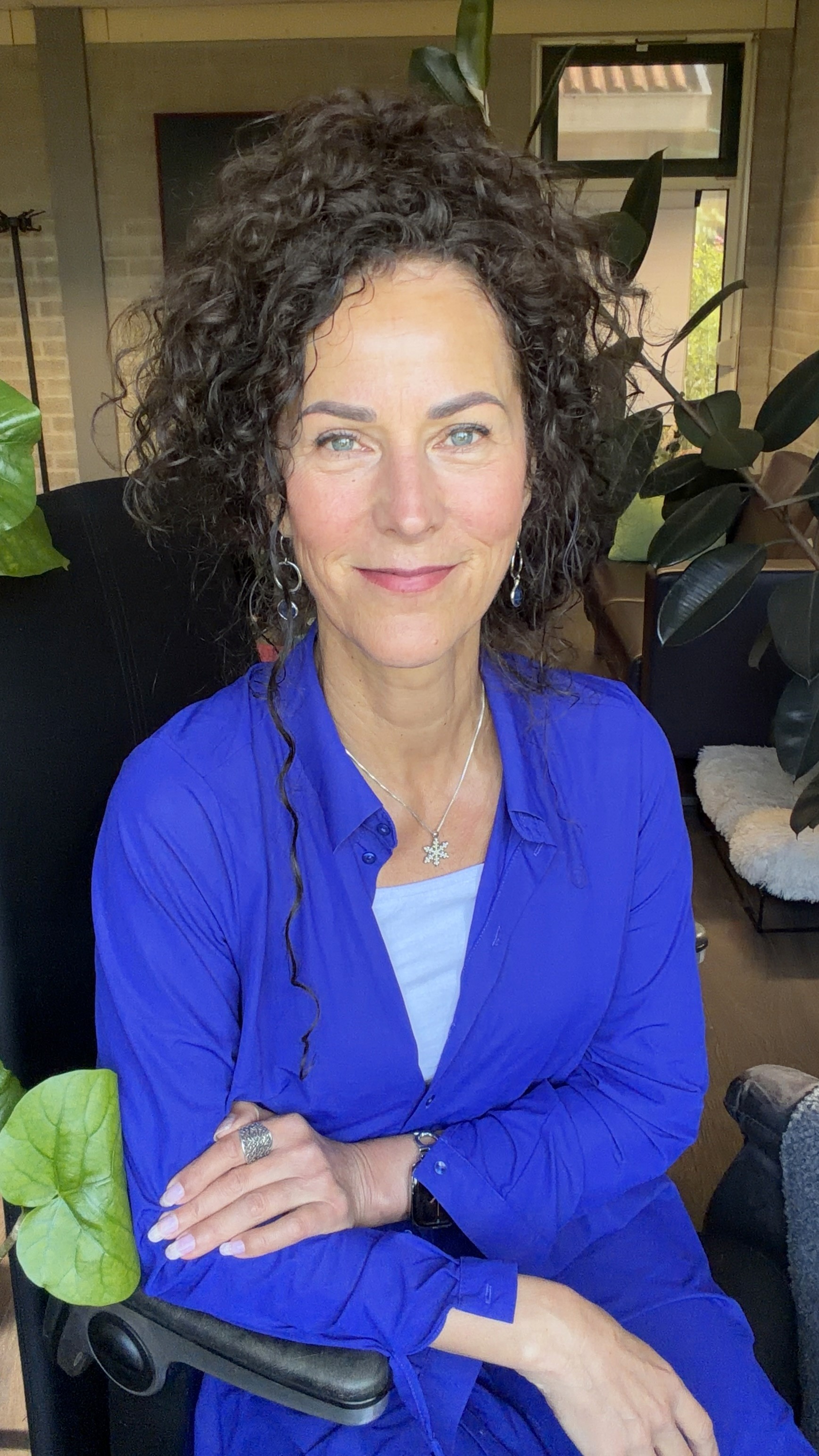
CREATED FROM CLINICAL PRACTICE
A real voice behind Back to Safety
Back to Safety grew out of my work as a clinical psychologist and psychotherapist. I wanted to make practical exercises and clear explanations available beyond the therapy room, for moments of stress, overwhelm, or when you need a little more support.
I developed the app to bring together what I use and value in clinical practice: practical exercises, careful explanations, and room to notice your own response. Not to tell you how you should feel, but to help you discover what may work for you.
Audrey de Jong
Clinical psychologist and psychotherapist
Creator of Back to Safety
Frequently asked questions
Is Back to Safety a form of therapy?
Is the app free to use?
What is included with Premium?
How long do the exercises take?
Are new exercises being added?
What does 'consistent with current research findings' mean?
Do I need to create an account?
What happens to my data?
Is the app also available in English?
Does Back to Safety work on iPad?
Back to Safety, whenever you need it
Start with eight free exercises to find what works for you. If you wish to continue, Back to Safety supports your progress with additional exercises, deeper clinical insights, and a clearer understanding of your personal patterns.
Download Back to Safety
For iPhone and iPad · Available in English and Dutch
Back to Safety
Developed by Audrey de Jong, clinical psychologist and psychotherapist.
Privacy
Terms and conditions
Contact
App Store
NL | EN
© 2026 Back to Safety